What time to set the ceremony: golden hour in Los Cabos and Riviera Maya
Cristian Rada · August 15, 2026
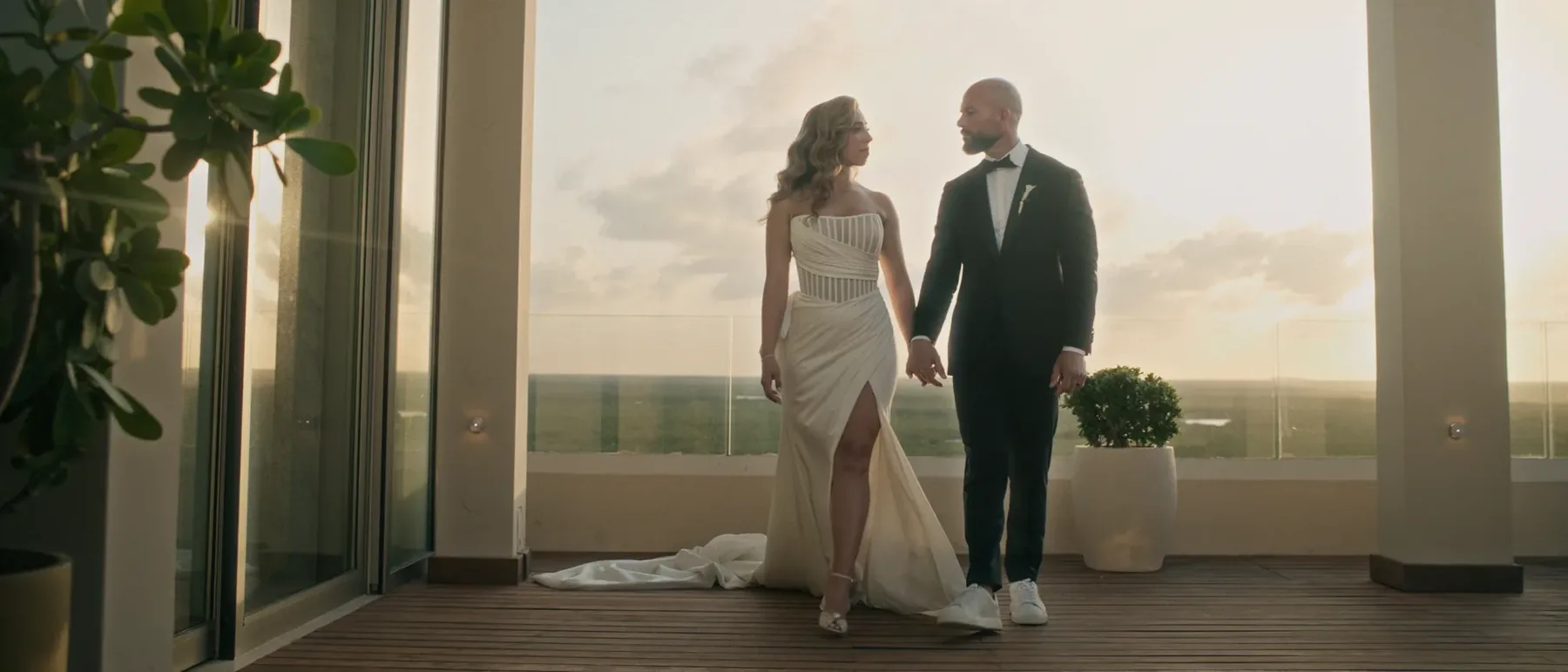
It is the single decision with the most visual impact on a beach wedding, and it is almost always made for reasons that have nothing to do with light: ballroom availability, dinner service time, whatever the hotel coordinator suggested.
The working rule
Start the ceremony 90 to 60 minutes before sunset. That gives you:
- A ceremony in warm, directional light rather than overhead light.
- The end of the ceremony landing right as golden hour opens.
- Couple portraits inside that window, not after it.
- Margin for the delay that every wedding actually has.
Golden hour does not last an hour. On the Mexican coast it is 30 to 40 minutes of usable light, and it closes fast.

Why Los Cabos and Riviera Maya do not solve the same way
Riviera Maya faces east. The sun sets inland, behind the property, not over the water. End-of-day light arrives soft and bounced, and the sky over the ocean turns cool while the couple is lit by warm bounce from behind. It looks excellent — but there is no sunset over the water. If the couple is picturing that, they need to be told beforehand.
Los Cabos faces west and south. There the sun does set over the Pacific, and that is the shot most people have in mind. The cost is that in the final half hour the difference in exposure between the couple’s faces and the background spikes — without light control, you keep the sky or you keep the faces, not both.

What almost nobody accounts for
- Sunset moves a lot across the year. More than an hour separates the shortest and longest day. The time that worked at a friend’s December wedding is not the time for June.
- Daylight saving shifts the clock, not the sun. Confirm the actual sunset time for your exact date rather than assuming it.
- A wall, a palapa or a tower changes everything. The sun can vanish behind a structure twenty minutes before official sunset. You find that out by visiting the venue at that hour, not by reading the hotel map.
- Wind picks up in the late afternoon on open coast, which matters if structures are being rigged.
How it actually gets decided
Before locking a time: confirm real sunset for the exact date, know which way the venue faces, and — if possible — see it at that hour. That single visit answers in ten minutes what no table can.
More from the studio